China Top First Aid Kits What Should Be in a Home Kit?

Time:2026-10-01 Author:Oliver
0%

A home first aid kit should be practical, clearly arranged, and ready for ordinary household emergencies. Cuts, burns, splinters, sprains, and minor allergic reactions can happen beside the kitchen sink or on a child’s playground. The right supplies cannot replace medical care, but they can provide calm, immediate support while help is arranged.

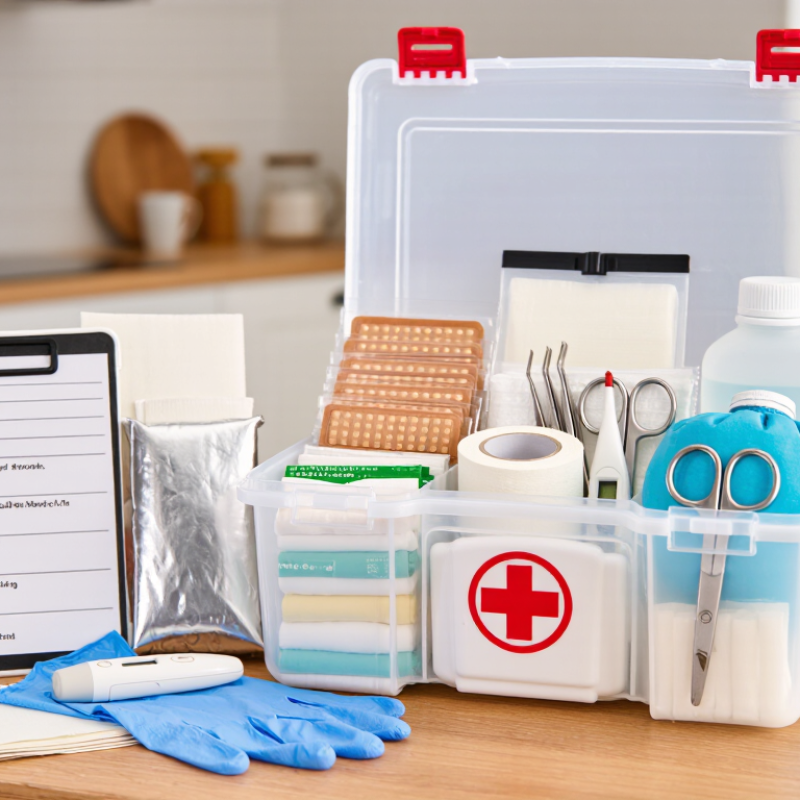
So, what should be in a basic home first aid kit? Essential items include adhesive bandages, sterile gauze, medical tape, antiseptic wipes, disposable gloves, tweezers, scissors, a digital thermometer, and a cold pack. Add burn dressings, an emergency blanket, saline solution, and written emergency contacts. Any medicine should remain in its original packaging, with instructions and expiry dates checked regularly. Keep the kit away from young children.

Emergency medicine specialist Dr. David Markenson has offered a useful reminder: “A first aid kit should support the care you are prepared to provide.” That idea matters when comparing China’s top first aid kits. A large box may look impressive, yet poor organization can waste valuable seconds. No kit is perfect. A missing pair of gloves or an expired dressing can expose weak planning. Review the contents every few months, especially after treating a wound. Place the kit where adults can reach it quickly, such as a labeled hallway cabinet. This guide examines sensible contents, storage details, and quality features for a dependable home kit. It also considers where common products may fall short, because convenience should never replace safety, training, or professional medical advice.
China Top First Aid Kits What Should Be in a Home Kit?

Define Home First Aid Needs: WHO Reports 1.19 Million Road Deaths Annually

WHO’s Global Status Report on Road Safety 2023 records about 1.19 million road deaths each year. It also estimates 20–50 million nonfatal injuries. These figures make home first aid planning more than a convenience. A kit should support bleeding control, minor burns, cuts, sprains, and shock while emergency services are contacted.

Keep sterile gauze, adhesive dressings, roller bandages, medical tape, disposable gloves, saline, antiseptic wipes, scissors, tweezers, a thermometer, and a cold pack. Add a clean emergency blanket and a CPR face shield. Pressure dressings matter after a road incident. The International Federation of Red Cross and Red Crescent Societies emphasizes early bleeding control and rapid referral. Do not rely on a kit alone.

Practical checks reveal overlooked problems. Can someone open the gauze with wet hands? Is the flashlight working at night? Are gloves available in several sizes? Medicines require extra caution because allergies and medical conditions differ. The World Health Organization recommends prompt professional assessment for serious injuries, breathing problems, and heavy bleeding. A home kit should include emergency numbers and simple instructions. It should be checked every few months. Some items will expire sooner than expected.

Stock Wound Care: Include Dressings, Gloves, Antiseptics, and Burn Supplies

China Top First Aid Kits: What Should Be in a Home Kit?

A dependable home first aid kit should prioritize wound care, not crowded accessories. The World Health Organization reports nearly 180,000 burn-related deaths annually worldwide (WHO, Burns Fact Sheet, 2023). That figure makes basic burn preparation more than a convenience. For everyday cuts, include sterile gauze, adhesive dressings, roller bandages, medical tape, and nitrile gloves. Choose individually sealed items with visible expiry dates. Clean packaging matters.

Gloves protect both the injured person and the helper from body fluids. Keep several pairs in different sizes, because one size rarely fits everyone. For minor wounds, clean running water should remove dirt before applying an antiseptic around the wound. Avoid pouring harsh chemicals into deep injuries. A small blunt-tip scissors, tweezers, and a waterproof waste bag can make treatment less awkward. Real homes are messy. Supplies should be easy to find under stress.

Burn supplies need careful selection. The American Burn Association estimates that about 486,000 burn injuries receive medical treatment in the United States each year (ABA, National Burn Repository). Store sterile, non-adherent dressings, clean gauze, and a simple burn-care instruction card. Cool running water is preferred for a fresh minor burn; ice, butter, and household oils can worsen tissue damage. A kit can look complete yet fail when dressings stick or gloves tear. Check contents every six months, replace opened packages, and question whether the chosen items remain practical for children, older adults, and actual household risks.

Add Emergency Tools: AHA Says Survival Falls 7–10% Per Minute Without CPR

A home first aid kit should support quick, calm action during bleeding, burns, falls, or sudden illness. Keep sterile gauze, adhesive dressings, medical tape, antiseptic wipes, disposable gloves, tweezers, scissors, a digital thermometer, and a breathing barrier inside a labeled, waterproof box. Add a flashlight, spare batteries, emergency blanket, instant cold pack, and a written list of medical conditions and emergency contacts. Small details matter. A missing pair of gloves can slow safe care.

Cardiac arrest requires more than ordinary supplies. The American Heart Association reports that survival can fall by about 7–10% for every minute without CPR and defibrillation. Call emergency services immediately, place the phone on speaker, and begin hands-only CPR if the person is unresponsive and not breathing normally. An automated external defibrillator can guide rescuers with voice instructions. It should be used as soon as available. CPR training is strongly recommended, because reading instructions during panic may not be enough.

Tips: Check the kit every six months. Replace expired or opened items. Store it where adults can reach it quickly, but children cannot. Learn the exact location of the nearest public defibrillator. Do not rely on the kit alone. I once underestimated how confusing a crowded drawer could become; clear labels and a simple layout are safer. Practice calling for help, unlocking the door, and giving the exact home address.

Select China-Made Kits: Check NMPA Status, Standards, and Product Traceability

China Top First Aid Kits: What Should Be in a Home Kit?

A home kit should match real household risks, not simply contain more items. The National Safety Council’s Injury Facts 2024 reported over 161,000 preventable injury deaths in U.S. homes during 2022. That figure supports practical preparation, including sterile dressings, adhesive strips, gloves, antiseptic wipes, tweezers, scissors, and a digital thermometer. Keep supplies sealed, clearly labeled, and easy to reach. Small details matter.

For China-made kits, verify NMPA status through the official database when products are classified as medical devices. Registration or filing may apply to specific components, not always the complete kit. Check the product name, model, manufacturer, certificate details, and intended use. An ISO 13485 certificate can indicate a controlled quality system, but it does not prove every product is compliant. That distinction is often missed.

Traceability should continue after purchase. Look for batch numbers, production dates, expiry dates, Chinese instructions, responsible distributor information, and a usable complaint channel. Where applicable, confirm UDI information and match it with the packaging record. Review relevant Chinese GB standards or recognized standards such as ANSI/ISEA Z308.1, but do not treat a printed standard number as automatic proof. In procurement reviews, this is where weak evidence appears. A barcode can fail. Records can be incomplete. Replace expired items, and document checks every few months. A perfect kit is unlikely. A verifiable one is safer.

Maintain Readiness: Inspect Supplies Regularly and Replace Expired Items

A home first aid kit is useful only when its contents are ready to use. During routine household checks, I inspect the kit every month, not just after an injury. I place it on a clean table and examine each packet, bottle, seal, and instruction sheet. Small details matter. A loose bandage wrapper, cloudy liquid, or cracked container may indicate poor storage. I record expiry dates in a simple phone note, although I sometimes forget to update it.

Remove expired dressings, antiseptic solutions, pain relievers, and other medical items according to their labels. Do not pour medicines into a sink unless local disposal guidance permits it. A pharmacist or health authority can explain safer disposal. Check sterile gauze and adhesive strips for dampness, discoloration, or broken seals. Replace them immediately. Test the flashlight and batteries, if included. Inspect scissors, tweezers, gloves, and the thermometer for damage or dirt.

Storage conditions also affect reliability. Keep the kit dry, cool, and easy for adults to reach, away from sunlight and children. After using supplies, restock them promptly and record what was used. I once overlooked a nearly empty antiseptic bottle because it had not expired. That mistake changed my checklist. Every three months, compare the contents with household needs, including allergies, children, and chronic conditions. When uncertain, ask a qualified healthcare professional instead of guessing.

FAQS

What wound-care items should a home first aid kit contain?

Include sterile gauze, adhesive dressings, roller bandages, medical tape, nitrile gloves, antiseptic wipes, scissors, and tweezers. Keep extras.

Why should gloves come in different sizes?

Different sizes improve comfort and control during care. One size rarely fits everyone. Store several pairs.

How should someone clean a minor wound?

Rinse the wound with clean running water to remove visible dirt. Apply antiseptic around the wound, not deep inside it. Avoid harsh chemicals.

What supplies help with minor burns?

Keep sterile non-adherent dressings, clean gauze, and simple burn-care instructions. Cool running water can help a fresh minor burn. Do not use ice, butter, or household oils.

What emergency tools belong in the kit?

Add a digital thermometer, breathing barrier, flashlight, spare batteries, emergency blanket, instant cold pack, and waterproof waste bag. Use a labeled box.

What should someone do during suspected cardiac arrest?

Call emergency services immediately and use speakerphone. If the person is unresponsive and not breathing normally, begin hands-only CPR. Use an available automated defibrillator promptly.

How often should a first aid kit be checked?

Inspect it monthly, with a fuller household-needs review every three months. Replace expired, opened, damp, cloudy, or damaged items. Every six months is better than never.

Where should the kit be stored?

Keep it dry, cool, labeled, and easy for adults to reach. Children should not access it. Avoid direct sunlight.

What information should be kept inside the kit?

Add emergency contacts, medical conditions, allergies, and the exact home address. Include clear instructions. A crowded drawer can confuse anyone.

How can a household prepare for stressful emergencies?

Practice calling for help, unlocking the door, locating the kit, and finding the nearest public defibrillator. Reading instructions during panic may not be enough. I once underestimated this.

Conclusion

A well-prepared home first aid kit should address common injuries and urgent situations, especially since accidents can happen without warning. What should be in a basic home first aid kit includes adhesive bandages, sterile dressings, medical tape, disposable gloves, antiseptic wipes, scissors, tweezers, a digital thermometer, and burn-care supplies. These essentials can help manage cuts, bleeding, minor burns, sprains, and other everyday emergencies while professional medical help is being arranged. With road accidents causing approximately 1.19 million deaths worldwide each year, every household should also understand basic first aid and emergency response.

Additional tools may include a CPR face shield, emergency blanket, cold pack, flashlight, and a simple first aid guide. Fast action is critical because survival can decrease by roughly 7–10% for every minute without CPR in some cardiac emergencies. When selecting a China-made kit, check its NMPA status where applicable, relevant quality standards, labeling, and product traceability. Inspect the kit regularly, replace expired or damaged items, and store it in a dry, accessible location known to all household members.

Oliver

Oliver

Oliver is a seasoned marketing professional with a wealth of expertise in driving brand awareness and engagement. With a deep understanding of our company's product offerings, he consistently delivers high-quality content that enriches our professional blog. His insights not only shed light on......